Tuesday, December 10, 2019

Waste Disposal


Waste disposal:
 Do You Know Where Your Trash Goes?


A boy swims in the polluted waters of the river Sabarmati to dive for offerings thrown in by worshippers in the western Indian city of Ahmedabad in 2010. Photo by Amit Dave/Reuters
The picture is filled with splashes of bright orange, lilac, and royal blue. Beside rusty brown and white baubles, there are pockets of slate gray. Perhaps you weren't able to tell because of the vibrantly colored trash, but this is a river in Ahmedabad, India. Here a young child is pictured swimming amongst the waste and sewage of city streets.

India is currently ailed with air pollution, toxic foam, Polluted water, and waste taking up most of the land. It is estimated that India produces 25,940 tons of plastic waste in one day. (DownToEarth) 


  In past articles, we have discussed plastic pollution and dead zones.  Both are a byproduct of improperly disposed of human waste/trash. 230 million tons of trash is produced each year by the United States alone - that averages out to about 4.6lbs per person. (learner) 

   Though it may be hard to imagine, Indias waste ridden rivers are may not be too far off from our own. While not sharing massive amounts of trash with its southeast Asian counterpart, the Merrimack River is facing similar issues.

    A landfill in Rochester was allowed a permit to dump 100,000 gallons of waste into the Lowell water treatment plant. Lowell later suspended the contract after they discovered that the landfill was causing toxic runoff into the Merrimack River. This could affect many, considering that the Merrimack is a local water source to half a million people. Lowell claims that they discovered "forever Chemicals" in the water from the landfill. These forever chemicals are linked to kidney cancer, low infant birth weights, and other ailments. The company's wastewater contained 100x more chemicals than regulation allows. Lowell hopes to stop accepting the toxic water produced from the unnamed landfill.

Lower Merrimack River Map


So how do we address this issue?

   There are many different ways we all can contribute to the cause and prevent it from worsening over time.

1)  Don't throw things out, Reuse! (Learner.org)

   We can reduce the amount of trash we produce by reusing and recycling.

2) Less packaging = Less Waste (Learner.org)

    Packaging produces excess plastic and paper waste. We can reduce the amount produced by endorsing minimalistic packaging or using recycled/recyclable materials.

3) Recycling!

Learner.Org goes on to list how/why recycling is helpful:

  • "Curbside recycling containers. The community provides containers in which individual families deposit such materials as newspapers; glass bottles and jars; tin and aluminum containers; plastic bottles and bags; mixed waste paper (cardboard, phone books, magazines, junk mail, office paper, brown bags); and used motor oil. The community arranges for curbside pickup and delivery to a recycling facility.

  • Drop-off recycling zones. Groups of large recycling bins are installed on public property in one or more locations throughout the community.

  • Recycling centers. The community provides the center itself and encourages residents to drop off or sell refuse materials there.

  • Green waste diversion and composting programs. Leaves, grass clippings, and other organic waste materials are composted and used to enrich soil or as mulch or landfill cover."

we all have the ability to help change our circumstances and improve the health of our environment.


Works Cited
Abel, David, and Maria Lovato. "Lowell water treatment plant to stop accepting toxic water from N.H. landfill." BostonGobe.com, 7 Nov. 2019, www.bostonglobe.com/metro/2019/11/07/lowell-water-treatment-plant-stop-accepting-toxic-water-from-landfill/tmXpsDYlCI6Bow0rovemkJ/story.html#:~:targetText=Under%20pressure%20from%20lawmakers%20and,than%20a%20half%2Dmillion%20people.
Kaur, Banjout. "40% plastic waste littered on India's streets: Javadekar in Lok Sabha." DownToEarth, www.downtoearth.org.in/news/waste/40-plastic-waste-littered-on-india-s-streets-javadekar-in-lok-sabha-67887. Accessed 23 Sept. 2019.
Merrimack River. Des,Nh,Gov, www.des.nh.gov/organization/divisions/water/wmb/rivers/merri_river_upper.htm. Accessed 10 Dec. 2019.
Reuters, Amit Dave. A boy swims in the polluted waters of the Sabarmati River to dive for offerings thrown in by worshippers in the western Indian city of Ahmedabad. 2010. PBS.Org, 2010, www.pbs.org/newshour/world/in-worlds-poorest-slums-landfills-and-polluted-rivers-become-a-childs-playground. Accessed 6 Dec. 2019.

 

Monday, November 25, 2019

Dead Zones

The Earth is Dying and Most of Us Don't Care, a series: Dead Zones 


    When we think of lakes, oceans, and rivers, we typically picture the abundance of life teeming beneath the surface. Oceans are depicted as deep blue-green waves filled with brightly colored coral and tropical fish. Marine life both large and small makes up the vast oceans. Smaller numbers of silver, green and brown fish fill the lakes and rivers. Many microscopic organisms live in the mud, which houses plants and crustaceans as well. 


P1060846_Fotor_Fotor.jpg (800×589)

    Point being, people believe that all bodies of water are filled with life. Unfortunately, this is a misconception. Our waters are currently plagued with numerous problems. The most commonly known being pollution (Plastic Paradiseand climate change. Climate change and Pollution aren't the only issues they face. Is there more to the dying oceans and lakes? What silent killers lie beneath the water's surface? There is an issue, unknown by most that are harming the health of the oceans: Dead Zones.

 What is a ¨Dead zone¨?


A dead zone is an occurrence of hypoxia, or reduced levels of oxygen in the water (OceanService). 


¨ Besides the sediment, there are dissolved molecules, nitrogen and phosphorus. And those, through a biological process, lead to the formation of areas called dead zones. ¨
- Nancy Rabalais


How Is a Dead zone Created?

Dead Zones can occur naturally but are typically the result of human activities that cause nutrients pollution. 

  • Nutrients pollution refers to excess nutrients in runoff from pipes/wastewater
    • Fertilizer from crops = wastewater
  • Wastewater usually from areas with a high concentration of humans (NASA)
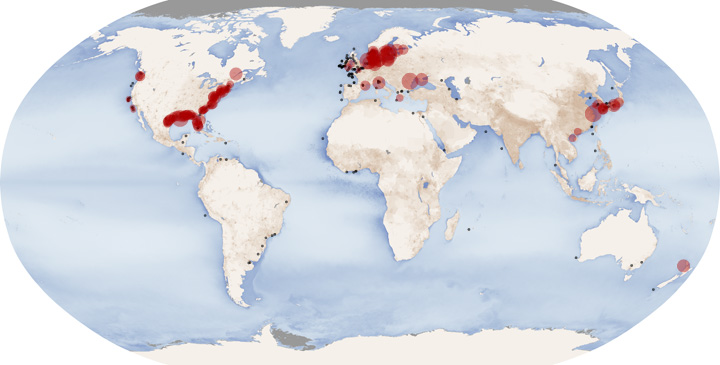
Aquatic Dead ZonesExcess water from humans runs into the coast, which stimulates algae growth. As the algae decompose, the process consumes oxygen and depletes the supply of the area. (Oceanservice) 

Why is this important?

Marine life cannot live without oxygen, and therefore cannot survive in a dead zone. Marine life will either move to another location or die-off if they are unable to move. (OceanService)

How can we help?

During her TedTalk in New Orleans, Nancy Rabalais Gives plenty of good examples of how people can help in their everyday lives.
  • Eat Less Meat
  • Avoid using corn oil
  • Use a car that uses nonethanol gas
She ends her talk, stating:


¨To change the type of agriculture in the US is going to be many big steps. And it's going to take political and social will for that to happen. But we can do it. 
I strongly believe we can translate the science, bridge it to policy and make a difference in our environment. We all want a clean environment. And we can work together to do this so that we no longer have these dead zones in the Gulf of Mexico. ¨

I too believe that we all have the potential to change the world that we live in. Everyone must contribute to the cause and work together to better our habitat.

Works Cited
"Aquatic Dead zones." Earth Observatory Nasa, 1 Jan. 2008, earthobservatory.nasa.gov/images/44677/aquatic-dead-zones. Accessed 25 Nov. 2019.
Diving Photos Maldives. Diving Adventures Worldwide, www.diving-adventures-worldwide.com/project/photos-maldives/. Accessed 25 Nov. 2019.
Model of Earth Showing Population Density + Dead Zones. 2 Jan. 2008. Earth Observatory Nasa, 2 Jan. 2008, earthobservatory.nasa.gov/images/44677/aquatic-dead-zones. Accessed 25 Nov. 2019.
Rabalais, Nancy. "The ¨dead zone' of the Gulf of Mexico." Nov. 2017, New Orleans. Lecture.

"What Is a dead zone?" Ocean Service NOAA, 2 Aug. 2019, oceanservice.noaa.gov/facts/deadzone.html. Accessed 25 Nov. 2019.

Friday, November 15, 2019

Plastic Paradise

The Earth is Dying and Most of Us Don't Care, a series: Plastic Paradise

Image result for plastic pollution instagram
@MariefeandJakesnow Snow, Jake, and Marie Fe Snow. The picture on Beach with Plastic.

I'm sure that you've probably heard about it all. Whether it be climate change, plastic straws, or dying sea creatures. The bleeding hearts of "environmental activists" always seem to creep through your social media. Unfortunately, their persistence and limited knowledge of the issues have had an adverse effect on their target audience. Rather than creating awareness, these posts create ignorance. Despite our contempt for the #plasticparadise posts, perhaps it's about time to consider the real problems behind the hashtag.


So why is plastic waste in the ocean a problem?


"In the ocean, plastic debris injures and kills fish, seabirds and marine mammals. Marine plastic pollution has impacted at least 267 species worldwide, including 86% of all sea turtle species, 44% of all seabird species and 43% of all marine mammal species. The impacts include fatalities as a result of ingestion, starvation, suffocation, infection, drowning, and entanglement.7"
"The Problem of Marine Plastic Pollution." Clean Water Action


Besides affecting the health of our fellow earth inhabitants, plastic pollution can actually harm the health of humans as well. Plastics in the ocean break down into smaller particles, which are ingested by all marine life. We will eventually ingest these particles after consuming any sort of seafood. Gianna Andrews of the Geology and Human Health studies states: "...toxins in plastics are directly linked to cancers, birth defects, immune system problems, and childhood developmental issues." Plastic particles can harm both animals and humans if consumed and cause a lot of harm. Decreasing populations of sea life can affect the environment, as species lose both predators and prey. Plastic pollution can affect every living thing, including us. We are not exempt from the effects of pollution.

So what can you do? Basic recycling, consciousness when buying single-use plastics, and cleaning up trash that you may see, are always helpful. If you feel as if that isn't enough, you could help out on a larger scale. Try to see what legal action can be taken against this plastic monstrosity by contacting govt. officials. We are living in a time that could possibly be the end of the earth, if that doesn't motivate you then I don't know what will.


Works Cited:


Andrews, Gianna. "Plastics in the Ocean Affecting Human Health." Geology and Human Health, serc.carleton.edu/NAGTWorkshops/health/case_studies/plastics.html. Accessed 15 Nov. 2019.
"The Problem of Marine Plastic Pollution." Clean Water Action, www.cleanwater.org/problem-marine-plastic-pollution. Accessed 15 Nov. 2019.

Snow, Jake, and Marie Fe Snow. Picture on Beach with Plastic.


Waste Disposal

Waste disposal:  Do You Know Where Your Trash Goes? The picture is filled with splashes of bright orange, lilac, and royal blue. B...