The Earth is Dying and Most of Us Don't Care, a series: Dead Zones
When we think of lakes, oceans, and rivers, we typically picture the abundance of life teeming beneath the surface. Oceans are depicted as deep blue-green waves filled with brightly colored coral and tropical fish. Marine life both large and small makes up the vast oceans. Smaller numbers of silver, green and brown fish fill the lakes and rivers. Many microscopic organisms live in the mud, which houses plants and crustaceans as well.

Point being, people believe that all bodies of water are filled with life. Unfortunately, this is a misconception. Our waters are currently plagued with numerous problems. The most commonly known being pollution (Plastic Paradise) and climate change. Climate change and Pollution aren't the only issues they face. Is there more to the dying oceans and lakes? What silent killers lie beneath the water's surface? There is an issue, unknown by most that are harming the health of the oceans: Dead Zones.
What is a ¨Dead zone¨?

What is a ¨Dead zone¨?
A dead zone is an occurrence of hypoxia, or reduced levels of oxygen in the water (OceanService).
¨ Besides the sediment, there are dissolved molecules, nitrogen and phosphorus. And those, through a biological process, lead to the formation of areas called dead zones. ¨
- Nancy Rabalais
How Is a Dead zone Created?Dead Zones can occur naturally but are typically the result of human activities that cause nutrients pollution.
- Nutrients pollution refers to excess nutrients in runoff from pipes/wastewater
- Fertilizer from crops = wastewater
- Wastewater usually from areas with a high concentration of humans (NASA)
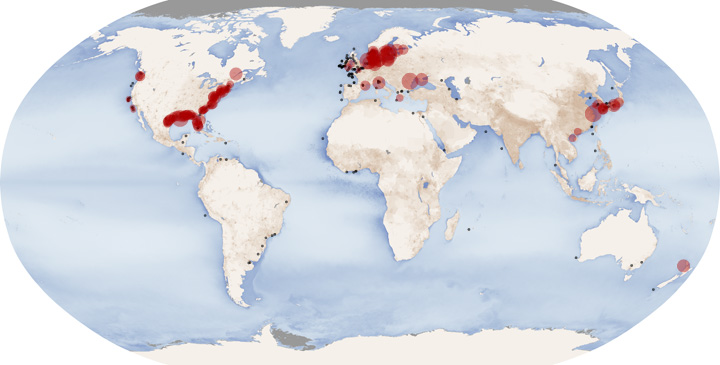 Excess water from humans runs into the coast, which stimulates algae growth. As the algae decompose, the process consumes oxygen and depletes the supply of the area. (Oceanservice)
Why is this important?
Marine life cannot live without oxygen, and therefore cannot survive in a dead zone. Marine life will either move to another location or die-off if they are unable to move. (OceanService)
How can we help?
During her TedTalk in New Orleans, Nancy Rabalais Gives plenty of good examples of how people can help in their everyday lives.
- Eat Less Meat
- Avoid using corn oil
- Use a car that uses nonethanol gas
She ends her talk, stating:
¨To change the type of agriculture in the US is going to be many big steps. And it's going to take political and social will for that to happen. But we can do it.
I strongly believe we can translate the science, bridge it to policy and make a difference in our environment. We all want a clean environment. And we can work together to do this so that we no longer have these dead zones in the Gulf of Mexico. ¨
I too believe that we all have the potential to change the world that we live in. Everyone must contribute to the cause and work together to better our habitat.
Works Cited
"Aquatic Dead zones." Earth Observatory Nasa, 1 Jan. 2008, earthobservatory.nasa.gov/images/44677/aquatic-dead-zones. Accessed 25 Nov. 2019.
Diving Photos Maldives. Diving Adventures Worldwide, www.diving-adventures-worldwide.com/project/photos-maldives/. Accessed 25 Nov. 2019.
Model of Earth Showing Population Density + Dead Zones. 2 Jan. 2008. Earth Observatory Nasa, 2 Jan. 2008, earthobservatory.nasa.gov/images/44677/aquatic-dead-zones. Accessed 25 Nov. 2019.
Rabalais, Nancy. "The ¨dead zone' of the Gulf of Mexico." Nov. 2017, New Orleans. Lecture.
"What Is a dead zone?" Ocean Service NOAA, 2 Aug. 2019, oceanservice.noaa.gov/facts/deadzone.html. Accessed 25 Nov. 2019.


